

Seeing Things Differently - Part 2
Rachel Oag • July 9, 2026
Seeing Things Differently
More Than a Magnifier
Before you read...
If you've just stumbled across this blog, We’d recommend starting with the first one, it explains how this series came about after a conversation between two colleagues and why they wanted to start sharing some of the things Highland BlindCraft Sensory Services can do for individuals living with sight loss and their families.
When I left my conversation with Wendy after writing my first blog, one sentence stayed with me - "you can give people the tools, but you can't make them use them”. At first, I misunderstood what she meant, i thought she was saying the equipment wasn't the important part. Actually, it was quite the opposite, when most of us think about low vision aids we probably picture a magnifier, I know I did. But after spending more time chatting with Wendy, I realised that a magnifier is never just a magnifier.
It might mean reading your own post again instead of asking someone else to do it. Maybe it’s checking your emails first thing in the morning, catching up with friends on Facebook or reading a birthday card from your grandchildren without needing someone beside you. A large-button phone isn't simply an easier phone to use it's staying connected with the people you love. A liquid level indicator isn't just a clever gadget it's the confidence to make yourself a cup of tea without worrying about spilling boiling water. Even something as simple as turning on the subtitles while watching television can make a huge difference, rather than turning the volume up louder or missing parts of your favourite programme - subtitles can help someone follow along comfortably while everyone else in the room enjoys the programme too.
The more Wendy talked, the more I realised these aren't really pieces of equipment, they are little moments of independence. What really struck me was that so many of these solutions are incredibly simple. Some cost very little, and others - like changing accessibility settings on your phone, tablet or television - don't cost anything at all.
It made me stop and think how often we assume that adapting to sight loss must involve expensive technology, when sometimes the answer is already sitting in your home waiting to be switched on. Wendy told me about one gentleman who had always loved doing crosswords. Every morning, he'd sit down with a cup of tea and work his way through the crossword before getting on with the rest of his day. It was just part of who he was. After experiencing sight loss that wasn't going to improve, he accepted that those mornings were over. He thought he'd never be able to enjoy a crossword again. Instead of accepting that, the team sourced him large-print crossword books that suited his remaining sight. On paper, it doesn't sound like a life-changing moment. It's just a crossword… but the more I thought about it, the more I realised it was never really about the crossword. It was about getting a little piece of himself back. I think we all have something like that, maybe it's reading a book before bed or knitting, gardening, watching football, following your favourite author or keeping up with family online. Those things aren't just hobbies, they're part of our routine, identity and often the moments that help us relax after a busy day.
Losing the ability to enjoy them can feel like losing part of yourself. That's why Wendy's job isn't simply about introducing equipment. Before she recommends anything, she gets to know the person sitting in front of her:
What do they enjoy?
What have they stopped doing?
What's frustrating them?
What would they love to be able to do again?
The answers are different every single time. For one person, it's reading the newspaper. For another, it's seeing a recipe clearly enough to cook independently. That's when Wendy's words finally made complete sense to me.
"You can give people the tools, but you can't make them use them."
Everyone reaches that point in their own time. Some people are ready to embrace new ways of doing things straight away. Others need a little longer to process what has happened and rebuild their confidence. There isn't a right or wrong way. What matters is knowing that support is there when you're ready. Before these conversations with Wendy, I thought low vision aids were simply there to help people see more clearly. Now I see them very differently. They're about confidence, independence and staying connected to the people you love and the hobbies that make you smile.
Most of all, they're about helping people continue living the life they want to live.
Could Highland BlindCraft Sensory Services help you?
If you've found yourself reading this and thinking, "That sounds like Mum," or "I didn't know there was help for that," then please get in touch.
Our Sensory Services team is always happy to have a chat and point you in the right direction. Whether you're looking for practical advice, information about the support.
Our Marketing Coordinator, Rachel, recently sat down with Resource Centre Support Worker Wendy for a conversation about life with sight loss, the small adaptations that can make a big difference, and the incredible work carried out by Highland BlindCraft Sensory Services. This is the first in a new series, Seeing Things Differently: Hi, I'm Rachel, and I've worked at Highland BlindCraft for four years now. Living with a hidden disability myself, I've always been interested in how people adapt to life's challenges and find ways to continue doing the things they love. During my time here, I've had the privilege of working alongside an incredible group of colleagues, many of whom live with sight loss or other disabilities. One thing I've learned is just how adaptable people are. Life doesn't stop because your circumstances change. New routines are created, different ways of doing everyday tasks become second nature and, before long, those adaptations simply become your normal. Looking in from the outside, you often wouldn't have a clue how much work has been done has behind the scenes. Recently, I sat down with my colleague - and friend -Wendy. Although we work for the same organisation, we spend our days in completely different departments. Like a lot of workplaces, you know what your colleagues do in general, but you don't always appreciate what their day-to-day role really looks like. Wendy works within our Sensory Services team, supporting people with sight loss across the Highlands and Western Isles. She also lives with sight loss herself, so alongside her professional knowledge, she brings lived experience and a genuine understanding of many of the challenges people face. Her sight loss has never defined who she is, and I think that's one of the reasons she's so good at supporting others. She understands that no two people are the same, and that rebuilding confidence starts with listening. As we chatted over a cup of tea, I found myself stopping every few minutes thinking, I'd never even considered that! One example has really stayed with me. Imagine sitting down to a plate of chicken, mashed potatoes and cauliflower on a white plate. Most of us wouldn't think twice about it. But if your sight is reduced, where does one food end and the next begin? The answer can be as simple as changing the colour of the plate. By using a plate that contrasts with the food, each item becomes much easier to identify. It's such a simple idea, but one that could make mealtimes less frustrating, more enjoyable and help someone feel more confident and independent. That conversation made me realise something I'd never really thought about before. What looks effortless is often the result of learning, patience and support. The little adaptations people make every day become so natural that they're almost invisible to everyone else. Many people know us for our handcrafted beds and mattresses, but our story began more than 145 years ago by creating employment opportunities for people with sight loss. Today, that purpose continues through meaningful employment for people with varied disabilities and through our Sensory Services team, who help people across the Highlands and Western Isles continue living independently and with confidence. When people ask what Highland BlindCraft does, it's easy to think of the beds we make. I'm incredibly proud of that. But after spending time with Wendy, I've realised we're about so much more than beds. We're about people. This is the first in what I hope will become a little series. Wendy shared so many stories, practical tips and moments that made me stop and think, and I'd love to pass some of those on. I hope you'll enjoy seeing things differently with me. If anything you've read today has resonated with you, or perhaps reminded you of a friend or family member, we'd love to hear from you. Whether you're looking for practical advice, information or simply don't know where to start, our Sensory Services team is here to help.
It’s National Volunteers’ Week, so what better way to begin our coverage by shining a light on a volunteer who has given up so much of her time to deliver one of our most popular services. Making a difference - the very essence of why many people, like our very own Irene Robertson, chose to volunteer. “When you help a person that brings a lot of satisfaction, knowing that you’re making a difference, no matter how big or small it is,” she said. For one of our longest-serving volunteers Irene, it’s one of the major reasons she chose to join our service. Another reason was her mum, as she explains. “I was at Raigmore for an appointment,” she said. “There were leaflets in the reception area and one of those was for Sight Action, as the service was known back then. “I had just retired from work, and I was looking for something to do. Getting involved with a sight loss charity just chimed with me because my mum had macular degeneration and glaucoma. “I went to see Sarah Shaw, who was the volunteer coordinator at the time, and was soon signed up to the talking books.” That was in 2017. Nine years later, Irene is still an integral part of talking books, coming in once a week to send out audio books requested by our service users. As well as talking books, Irene previously helped with the services’ daytrippers – a lunch club that involved 2-3 volunteers going out in the minibus, picking up service users, going for something to eat, then taking them home afterwards. Unfortunately, rising costs meant daytrippers disbanded a few years ago, but Irene stayed on, helping to provide a vital talking books service that continues to be well used. For Irene, the benefits are twofold. “I think both the volunteer and the person receiving the service have to get something out of it,” she said. “From my point of view, I feel I’m making a contribution that helps someone and hopefully that person I’m helping gets the benefit of that.” A weekly visitor to our offices, Irene continues to be a valued member of our team. “It’s a lovely bunch of people,” she said. “They keep me fed and watered when I’m in! The support I get to do the talking books has always been really good. “It’s always fun and a very nice environment to work in!” Thank you for all that you do Irene – we could not do it without you! #volunteersweek
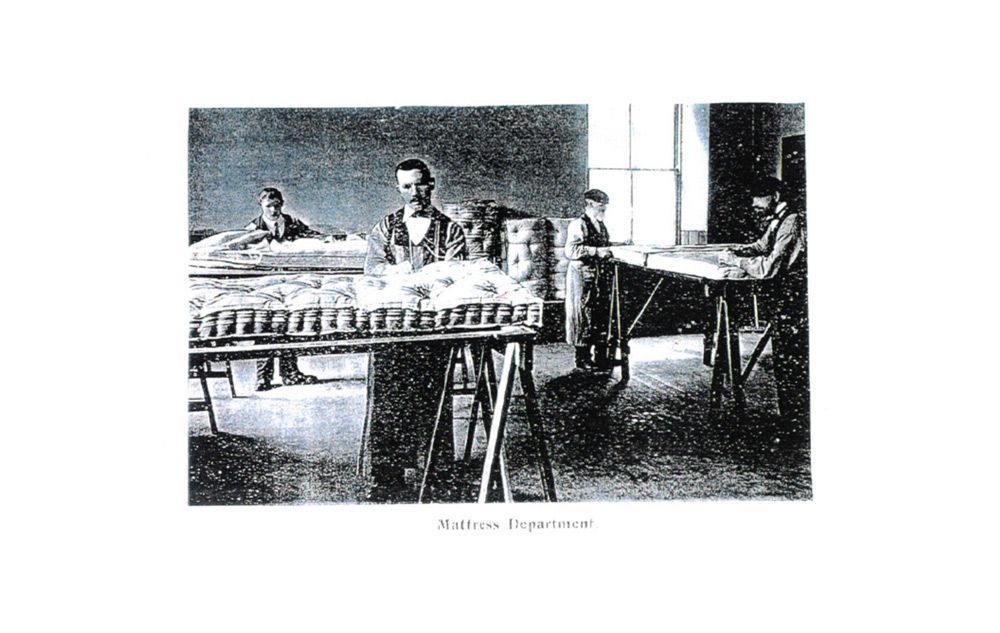
About the Big Furniture Group article:
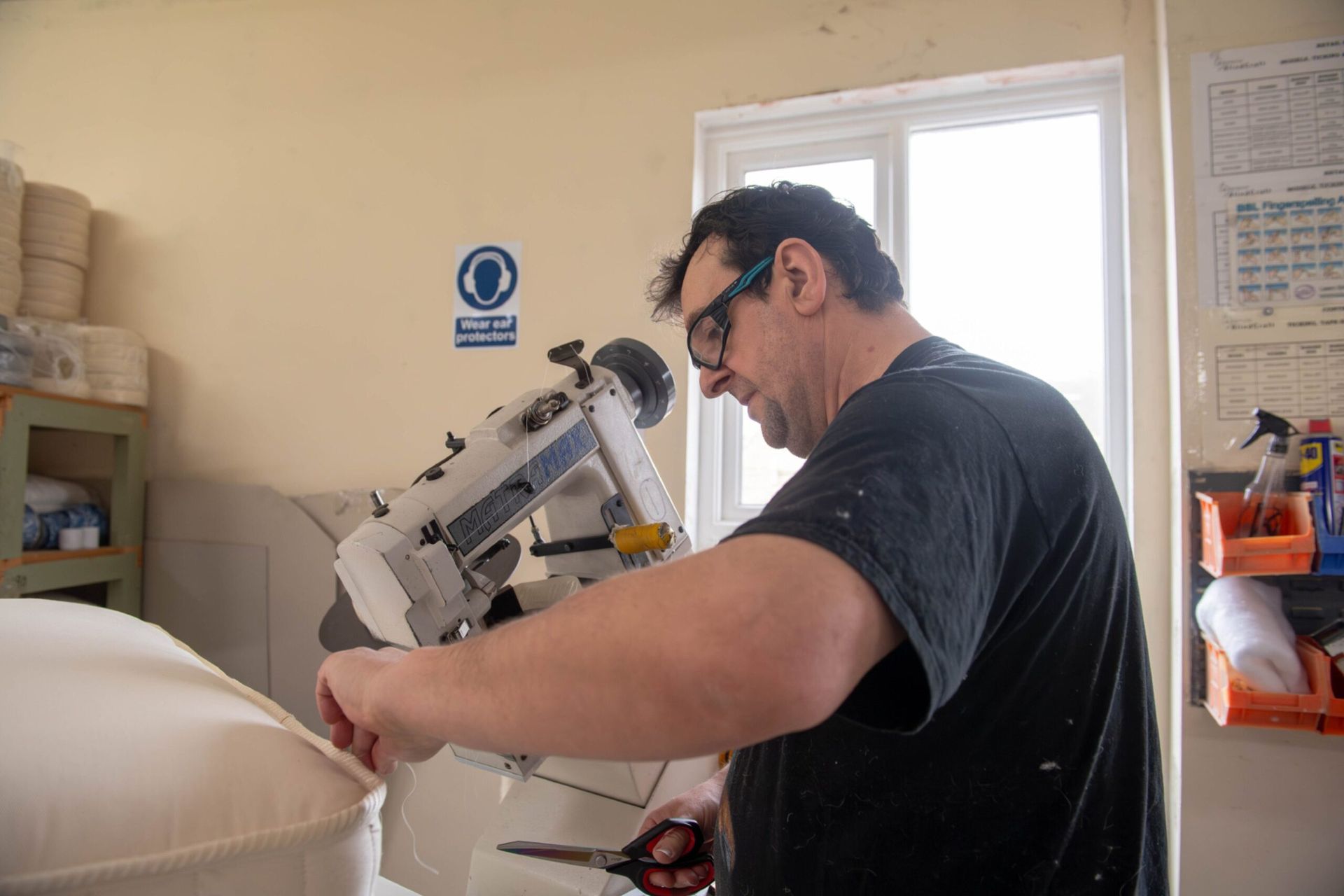
The journey of a Highland BlindCraft mattress
Materials or marketing? What too look out for when buying a new mattress.

Why sleep is different for everyone and the right mattress makes all the difference.

"They might be very good at it, but Highland Blindcraft is about far more than making beds..." We were lucky enough to have a visit from Press & Journal author Sarah Bruce - here's what she had to say about her time with Highland BlindCraft.
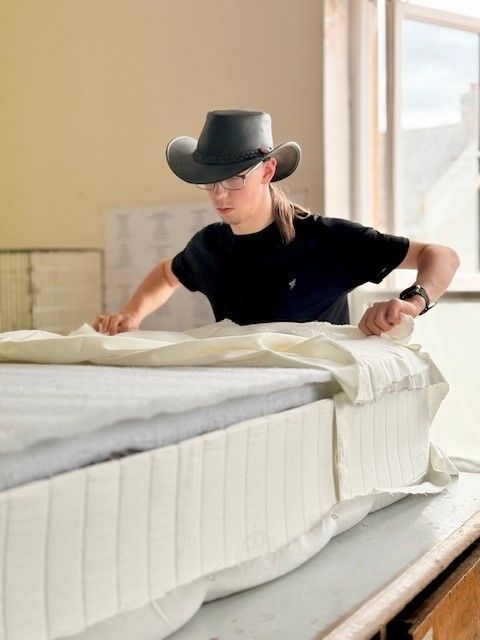
Highland Blindcraft lands major deal to supply mattresses to Scottish and Southern Electricity Networks (SSEN) for workers village near Fort Augustus!

Get your Sleep for a better day ahead.